
Field report from the Data layer of agent-readiness — and why "add FAQ schema" stopped being the answer in May 2026.
Here is a small experiment you can run in your head. Take a product page where the visible text says the item is in stock at £49, but the structured data buried in the page — left over from a template, never updated — says availability: OutOfStockand price: 89. A human reads the text and adds it to the cart. An agent reads the data and moves on to a competitor. Same page, two readers, opposite outcomes.
That gap was always a bug. What changed is who it costs you now. The Data layer of agent-readiness is the layer where your page makes assertions a machine acts on — and where the difference between what your prose says and what your markup says stops being cosmetic.
Prose narrates. Data asserts. The agent believes the assertion.
A page speaks in two registers at once. The visible text narrates: it persuades, hedges, tells a story. The structured data asserts: this product, this price, this availability, this author, this date. To a human, the prose is the page and the markup is invisible plumbing. To an agent, it's closer to the reverse. The agent can read your prose, but when it needs a fact to act on — what does this cost, is it available, who wrote this, when — it reaches for the assertion, because the assertion is unambiguous and the prose is not.
This is why the single most valuable thing you can do at the Data layer is also the most boring: make your data agree with your text. Not add more schema. Make the schema you have tell the truth. A page whose markup contradicts its visible content has told the agent two different things, and the agent has no way to know which one you meant. Google's own current guidance on AI features says exactly this — there is no magic markup that earns you AI citations, but whatever structured data you use should match the visible content on the page. Agreement first. Everything else second.
The two layers underneath, in order
Before any schema, two things have to be true, and they're cheaper than schema.
Semantic HTML. Use the tags for what they mean — main, article, nav, header, h1 through h3 in order — instead of a thousand interchangeable divs. This isn't aesthetic. An agent infers your page's structure from these tags. A clean heading hierarchy is also what lets retrieval systems split your content into sensible chunks: when an AI breaks your page into pieces to search, your h2 and h3 boundaries become the seams. Good semantic HTML means the machine cuts your content where you'd want it cut, not mid-thought.
Honest, complete core schema. For most sites that means Organization on the homepage, Article or BlogPosting on posts, and — if you sell — Product with complete Offer: price, currency, availability, SKU. These are the assertions agents reach for most. Organization and Person markup matter more than they used to, because they're how AI systems recognize you as an entity rather than a string of text — the difference between the model knowing who published something and just seeing words.
Do those two well and you've done the bulk of the Data layer. What follows is refinement, not foundation.
The plot twist: the schema everyone recommended just lost its headline use
For two years, the standard advice for "make your content AI-friendly" had a reliable first item: add FAQPage schema. It was the fast win — easy to implement, and it earned an expandable Q&A panel right in the search results. Plenty of AI-readiness guides, including older notes in my own dictionary, listed it as one of the highest-return moves at this layer.
That advice expired in May 2026, and it's worth being precise about how, because the way the industry reacted is itself a lesson.
As of May 7, 2026, FAQ rich results no longer appear in Google Search. The reporting and tooling around them are being withdrawn in stages through June and August. This wasn't a surprise out of nowhere — HowTo rich results walked the same path, fully deprecated on desktop back in 2023, and Google pruned seven more structured-data display types in 2025. The direction was set; FAQ was just the last large domino. The likely reason, reading Google's history rather than a press release they never wrote: these formats got abused as SERP-real-estate grabs rather than genuine answers, so Google retired the display feature instead of policing every implementation.
Then the overcorrection. Two camps formed instantly, and both are wrong. One says schema is dead — it isn't; Product, Article, LocalBusiness, Event, and Review still produce rich results, and entity markup matters more than ever. The other says FAQ schema matters more than ever now, for AI — also not established. FAQPage remains a valid type, the markup can stay on your pages without harm, and it may still help machines parse your Q&A content. But "may help AI parse it" is a quieter claim than "guaranteed SERP panel," and treating the deprecation as a reason to pile on more FAQ schema is exactly the display-feature thinking that got the format killed.
The honest takeaway is smaller and more useful than either camp: stop adding schema to win a visual treatment in search; add it to state facts that are true and visible. Schema that produces a genuine content signal survives these purges. Schema added to grab a panel does not. That's been the pattern through every one of these deprecations, and it's the only durable way to think about this layer.
What to actually do at the Data layer
If you run a content site: confirm Article/BlogPosting on posts and Organization on the homepage, check that your headings are real and ordered, and make sure no plugin is emitting markup that contradicts your visible text. That's a morning's work and it's most of the value.
If you run a store: this is your highest-priority layer, full stop. Complete Product and Offer data on every product — price, availability, currency, SKU, brand. An agent steering a buyer toward a purchase routes around the shop whose product data is incomplete, and it does it silently. You won't see the lost sale; it just won't happen.
If you run a services or booking site: Service or LocalBusiness markup, clear pricing, structured offerings — enough that an agent recommending options in your category describes you correctly instead of guessing.
And for everyone: keep your existing FAQ markup if you have it (removing it gains you nothing), but don't add more of it chasing a search feature that no longer exists. Put that effort into the one thing this whole layer comes down to — your data and your visible content saying the same true thing.
Why this layer rewards the boring move
Most of agent-readiness has an expiry date, and the Data layer proves it: the single most-recommended tactic at this layer became obsolete in a month. What didn't expire is the principle underneath it. Semantic structure and honest, complete data outlive any specific schema type, any specific rich result, any specific search feature. Build at the level of true, legible assertions and you survive the next deprecation without noticing it. Build at the level of this month's SERP trickand you'll be rewriting again by autumn.
The agent doesn't reward your cleverest markup. It rewards your most honest one.
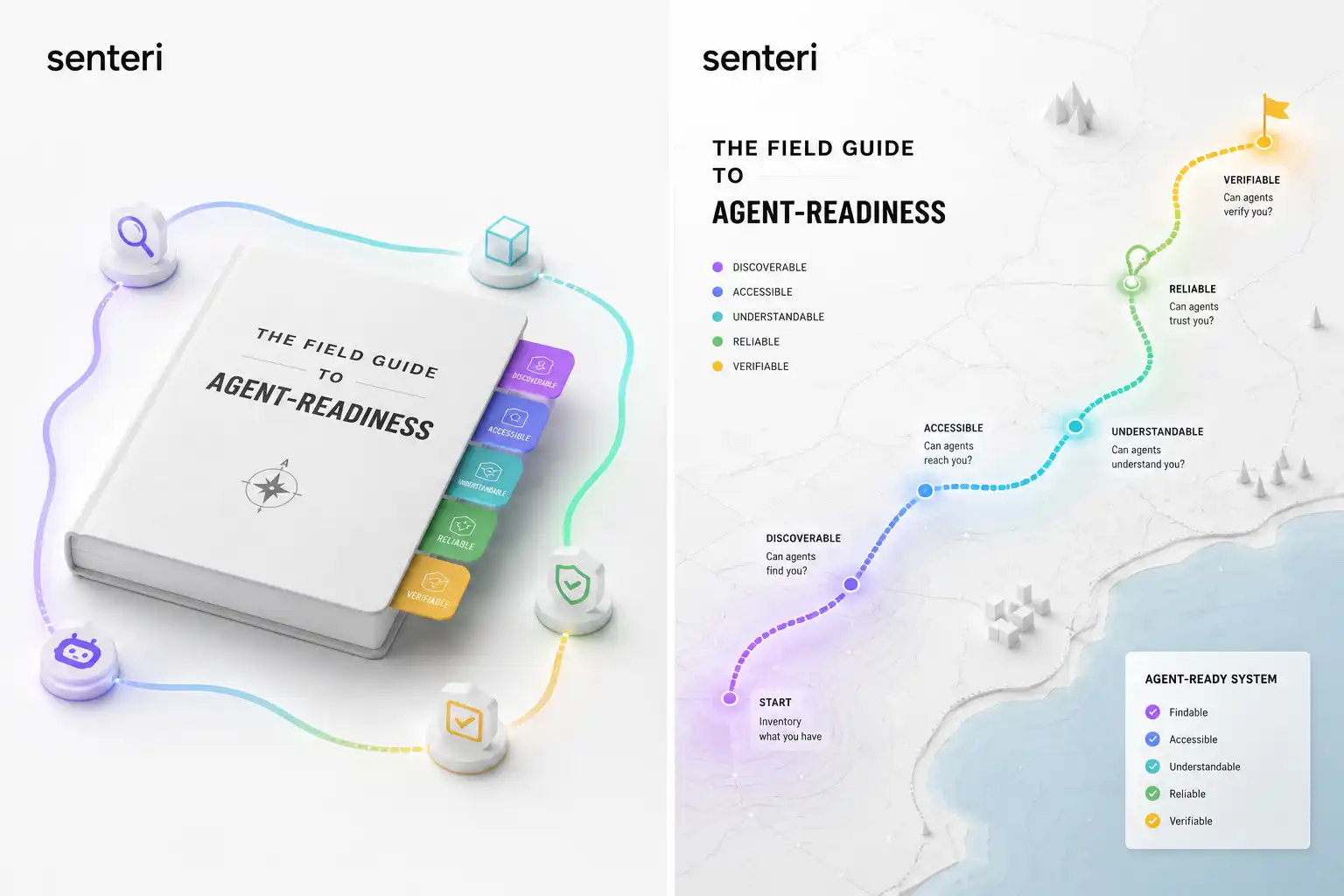
This is the Data layer of agent-readiness. For the whole map — all six layers, where to start, what's still unsettled — see The Field Guide to Agent-Readiness.